Friday, September 2, 2011
Green House Celebrations and Living with Dementia
Tuesday, July 12, 2011
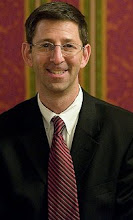
Dementia and John Mackey

Dementia is a general term for loss of memory and other mental abilities
severe enough to interfere with daily life. It is caused by changes in
the brain. Alzheimer’s disease is the most common form of dementia,
accounting for 50 to 70 percent of cases.There are 10 warning signs of Alzheimer's. If you or someone you know is experiencing any of the signs, please see a doctor. Early diagnosis gives you a chance to seek treatment and plan for the future. If you have questions, call us anytime: 877.877-IS IT ALZ (877.474.8259).
Thursday, June 9, 2011
Dr. Bill Thomas at the TedX Conference - Elderhood Rising

Dr. Bill Thomas, founder of the Eden Alternative and the Green House Project, is an inspirational speaker and thought leader.
He was invited to give a PRO aging talk at the TEDx conference in San Francisco.
The talk, entitled Elderhood Rising: The Dawn of a New World Age,
is now on YouTube and you can watch and share it here.
Please share your comments on Dr. Thomas' comments about positive viewpoint on aging and elderhood.
Thursday, May 26, 2011
Celebrating Aging at Stadium Place

Wednesday, May 25, 2011
GEDCO is going Green to meet LEEDS Construction Standards

Some long-term care providers are integrating LEEDS standards into their new buildings. GEDCO is building the first GREEN HOUSE® model of community-based long-term care in Maryland, and have designed it to meet the LEEDS-Silver level of certification. The improvements to the building will provide a better quality of life for the elders living in the building as well as the Shahbazim and other staff assisting them. See http://www.gedco.org/ for more information about The Green House Residences at Stadium Place.
During the design and development phase of the Baltimore project, the entire team was devoted to meeting the LEEDS standards. As a starting point, the project reuses a previously-developed site which reduces the environmental footprint of the building. In order to reduce exterior water consumption there will be no permanent irrigation system, and plants will be selected that are adapted to the local climate. Construction materials will be carefully selected so they contain large amounts of recycled content and they are manufactured and extracted regionally. In addition, the contractor has agreed to institute a construction waste management program that will divert at least 75% of construction debris from landfill. Another example of a design change is the HVAC system. The HVAC for this building will be a VRV (variable refrigerant volume) system which allows for individual space control and results in a far more economical and efficient system – it has a higher initial cost but will pay for itself over time through energy and operational savings.
Tuesday, May 24, 2011
Are you depending on Social Security benefits?
Eileen Ambrose has an excellent column in today's Baltimore Sun regarding financial planning for retirement. She highlights the fact that many boomers are starting to take their social security benefits before age 66, and this has a large financial impact.
For people born between 1943 and 1957, the Normal Retirement Age is now 66 years old. That means that benefits are reduced, for your entire lifetime, if you start taking benefits early. On the other hand, if you can wait just one more year to start SSA payments, the government will pay you an extra 8% of benefits.
A basic way older boomers may improve their finances is by delaying
retirement. Each year past age 66 that a worker defers collecting Social
Security, annual benefits go up another 8 percent, until age 70.The Social Security Administration has a very easy to use calculator, to determine your normal retirement age, and how much in benefits you might lose or gain by changing the age when you first take benefits.
However, the calculations of future Social Security benefits will likely change for many people, since the government can't afford to keep paying these benefits. The unfunded liability for Social Security benefits, promised to be paid over the next 75 years, is $6.5 trillion.
As Paul Ryan noted, according to the 2011 annual report of the the trustees of Social Security:
The Trustees now project that Social Security has entered into a period of permanent cash deficits. That means that to pay full Social Security benefits, the government must cut spending, raise taxes, or, more realistically, borrow more money to finance pension payments.
The 75-year actuarial imbalance has increased to 2.22 percent of payroll (up from 1.92 percent last year).
Social Security faces a $6.5 trillion unfunded liability (up from $5.4 trillion last year.)
The Social Security Trust Funds are expected to go insolvent in 2036,
meaning that certain birth cohorts above the age of 55 can expect to see a 23 percent cut in their benefits.Do we want to burden our children with sharply increased taxes and government debt to pay for social security benefits for their parents and grandparents? We need to start to solve this problem now.
Thursday, May 12, 2011
National Osteoporosis Awareness and Prevention Month
Osteoporosis, or porous bone, is a disease characterized by low bone mass and structural deterioration of bone tissue, leading to bone fragility and an increased risk of fractures of the hip, spine, and wrist. Men as well as women are affected by osteoporosis, a disease that can be prevented and treated. In the United States, more than 40 million people either already have osteoporosis or are at high risk due to low bone mass.
This is National Osteoporosis Awareness and Prevention Month. Estimates indicate that as many as 50 percent of Americans older than 50 will be at risk for osteoporosis fractures during their lifetimes. Osteoporosis is often called the “silent disease” because bone loss occurs without symptoms, but early diagnosis and treatment can reduce or prevent fractures from occurring.
For more information, vist the
NIH Osteoporosis and Related Bone Diseases national Resource Center or the National Osteoporosis Foundation
Medicare Coverage:
Medicare provides coverage for bone mass measurements once every 24 months (or more often if medically-necessary) for a qualified Medicare beneficiary when ordered by a physician or qualified non-physician practitioner.
Did You Know: Medicare provides coverage for a FREE, Welcome to Medicare preventive visit and an annual wellness check-up? See Medicare site for more information.
Tuesday, May 10, 2011
Leadership in Aging Awards

Monday, May 2, 2011
Encore careers and injuries among older workers
- Balance programs help prevent falls, including basic muscle strengthening and practicing standing on one leg, according to a recent article in the Baltimore Sun.
Balance training starts with strengthening all the muscles in the body: "To
do the activities of daily living as they relate to balance — walking down
the stairs, getting in and out of the bathtub — is really about maintaining
muscle strength," Bracko says. This can be done with an overall weight
training program. For those who haven't been to the gym in a while — or ever
— that training should start with the basics and get progressively more
difficult so that the muscles are always challenged."
USA today article regarding a report by CDC; CDC: Injuries among older workers on the rise.
More and more Americans over age 55 are working later in life, and this means
work-related injuries in this group continue to climb, up from 12% in 2003 to
17% in the latest tally, federal health officials report."
- Due to limited savings and funds available from pensions, more people are working in their 60's instead of retiring. However, many are changing focus from their earlier careers to more meaningful work. Marc Freedman has written an exciting new book, The Big Shift: Navigating the New Stage Beyond Mid-Life.
A recent book review noted: "With a 14-city book tour
underway, Marc Freedman is spreading the word about a new stage of life between midlife and old age. And while he’s attracting attention from boomers searching for meaning during that stage, he’s also gaining interest from national media outlets looking to explore what Freedman calls the “encore years.”
Monday, April 25, 2011
Struggling with Alzheimer's Disease
ChangingAging.org compiled some noteworthy resources, including the Alzheimer's Association.
They also recommend The Myth of Alzheimers:
The Myth of Alzheimer’s is a bold and direct challenge to the multi-billion dollar juggernaut that is the status quo of Alzheimer’s thinking, marketing and research. It’s an alternative approach seeking to humanize the way we think about brain aging and strengthen the care and solidarity provided to people affected by memory loss."
Friday, April 1, 2011
Community Fairs - Financial Assistance and Law Day
Many community organizations provide information and assistance for older adults, their family members, and other informal care partners. The Baltimore CASH Campaign is sponsoring Money Power Day 2011 this Saturday, April 2, 2011 from 9 am - 3 pm at Poly-Western High School (1400 W. Cold Spring Lane, Baltimore) Money Power Day is a FREE annual event providing Baltimore area residents and workers with quality financial services including:
- Free tax preparation
- Free credit reports and credit counseling
- Customized financial planning
- Housing counseling
- Screening for public benefits
- Financial programs for youth.
Thursday, March 17, 2011
TV shows and web site assistance for Family Caregivers
A Message from Joan Lunden: There are 45 million family caregivers in America who are assisting chronically ill, disabled or aged family members or friends. Family caregivers sacrifice not only their time, but often their physical and economic well-being in the process. Taking Care is a groundbreaking and courageous four-part series examining the growing concerns over caregiving.
Two free web sites are available to help families and friends coordinate care and keep people up to date:
Caring Bridge provides free websites that connect people experiencing a significant health challenge to family and friends, making each health journey easier.
Another site, Lotsa Helping Hands, provided by National Alliance for Caregiving, is a web-based caregiving coordination service that allows family, friends, neighbors, and colleagues to create a community and assist with the daily tasks that become a challenge when caring for an aging loved one or during long-term caregiving.
Do you have someone to talk to about caregiving? We are thinking of starting a support group at Stadium Place.
Wednesday, March 9, 2011
Short Video from Graceful Aging about Preventing Falls
Falls occur from environmental factors-physical things in your home. Falls also occur from your physical condition. Understanding where you may be increasing your chances for a destabilizing and harmful fall is the first safety step you need to take. Physical Therapist Zanobia Rabebeh helps us see ourselves and our home differently. The differences she highlights could mean all the world to your personal safety and good living. Short video: http://vimeo.com/20409074
Thanks to http://changingaging.org/ ChangingAging.org for this link.
Wednesday, March 2, 2011
Spring Cleaning and Income Taxes
Many people struggle with cleaning a house or apartment when it's time to move or downsize. It's helpful to clean as you go. So take this opportunity to look at the piles of clothes that may not fit or books that fill your shelves and consider donating them to an area charity.
Tuesday, February 15, 2011
Growing Older and Long Distance Caregiving
Here is a wonderful article by Caitlin Gibson in the Washington Post about a couple who celebrated their 80th Valentine's Day this year. http://www.washingtonpost.com/wp-dyn/content/article/2011/02/13/AR2011021303355.html?sid=ST2011021301591
Long distance caregiving is a growing challenge for many adults. Liza Berger writes in Today's Caregiver (Feb. 25, 2011) that more than three million Baby Boomers help to coordinate care for a family member or friend who lives at least an hour away. Among several good suggestions in getting organized, she suggests that people build a team of family, friends and care professionals that you can turn to for help in caring for your loved ones. http://www.caregiver.com/channels/long_distance/articles/long_distance_care_phenomenon.htm
Tuesday, January 25, 2011
Sharing and Remembering
Many people struggle with failing memories. It is a common challenge of aging.
I find that I don't remember much about my childhood. However, my father has a great memory. He just wrote a 30 page "memoir" about his life for my children. We learned about many stories that we had never known before.
Do you share stories of your youth with your children and grandchildren? How many of you have written down these stories for future generations?
Thursday, September 23, 2010
Falls Prevention Fair Today at Stadium Place
Come celebrate at the Safe Steps to Fall Prevention - A Resource Fair for Seniors and Caregivers at the Stadium Place Y today from 11am - 3pm.
We invite you to join us at an informational fair about fall prevention, home safety, and other important resources for seniors and caregivers.
Falls are the leading cause of nursing home admissions in the U.S. The Centers for Disease Control and Prevention estimates that more than $19.2 billion is spent treating the adverse effects of falls among the elderly.
Safe Steps to Fall Prevention - A Resource Fair for Seniors and Caregivers
Tuesday, February 9, 2010
Enjoying the Show
Let's why the #1 rated Super Bowl commercial, with Betty White and Abe Vigoda playing football, made us all smile. We can feel young again, even as we get older. It's all in our attitude.
With another storm bearing down on us, please remember to call your friends and neighbors to see if they need any assistance. Please help to clear paths around the neighborhood for the older residents and their pets.
Enjoy the pretty scenery.
This blog from Dr. Bill Thomas hits home, since I'm turning 45 next month!
Ageing alert! (from ChangingAging.Org by Dr. Bill Thomas)
Overhearing conversations on trains and busses I get the impression that many
people are very surprised that suddenly, one day, they are“old”. I have seen
this as early as 45 years in some friends also. Maybe we should have somebody
produce (witty) TV-spots to remind us not to panic when we realise that we are
“old”. It is just a reminder to think how to react, or better pro-act in order to
grow within this mature phase of our lives and how to mentor the younger
generations.
Tuesday, December 8, 2009
Loneliness during the holidays
A recent blog by Melanie Haiken at Caring.Com noted research of how loneliness could be contagious.
Please remember to call or visit your friends and neighbors during the next few weeks, especially older adults who may live alone.A few other interesting observations: • Women are more likely than men to report
a greater degree of loneliness. And women’s loneliness is more likely to spread
through their social networks.• Peoples’ chances of becoming lonely were more
likely to be influenced by what happened among friendships than among family
relationships.• Loneliness feeds on itself; people tend to push lonely people
away, probably out of discomfort and fear.Helping lonely people recognize that that's what they're feeling is an important first step; naming the feeling as loneliness keeps us from behaving like grumps and driving others away.
Friday, November 20, 2009
Magically Lessen the Ouch in your Pain
All of us experience pain from time to time. Pain is the #1 reason people schedule doctor’s appointments. However, some of us suffer daily and constant pain. Whether you have muscular, nerve or joint pain—certain self-help activities can bring relief and comfort while it alleviates some of the painful moments.
How do you do this? First identify your pain: Is it muscular, nerve, joint, or bone? Internal or external? Does your pain occur after you eat certain foods, walk, exercise, bend down, talk with a certain person, or become fearful?
Is your pain burning, stabbing, constant, or episodic? The first action to take towards self-help with pain management is to identify where your pain occurs, when does it occurs, how long does the pain last, is there a predisposing factor that contributes to your pain? These are just a few questions to ask yourself about pain. Learn about your pain---know when it starts and when it ends.
Pain can result from various issues with the body, including physical and mental fatigue and exhaustion, and when there is a lack of balance in the body. A new integrative approach to pain management encourages patients to understand their pain. Integrative means to think of your body in the traditional medical sense—as a biophysical machine, but to also include the dimensions of pain management that includes a holistic or integrative approach.
For more information about integrative medicine, please contact Jacqueline Kreinik, our guest blogger, at jkreinik007@gmail.com.